Oh my goodness, is there anything better than sinking into a warm bowl of ramen on a chilly evening? Seriously, nothing hits the spot quite like that savory broth warming you up from the inside out. Forget those sad little packets you ate in college! I spent ages perfecting a version that tastes like it simmered all day, but honestly, it comes together faster than you think.
This recipe for Nourishing Homemade Chicken Ramen is my go-to when I need something hearty and healthy without spending hours over the stove. We’re loading it up with good stuff—tender chicken, perfectly cooked eggs, and fresh bok choy. You are going to be so proud of the depth of flavor you pull out of such simple ingredients. Trust me, once you make this at home, you won’t look back!
If you want to see an even quicker approach for those *super* busy days, peek at my guide on easy chicken ramen bowls, but for now, let’s focus on this deeply satisfying version!

Why This Nourishing Homemade Chicken Ramen Stands Out (Experience & Expertise)
You might think homemade ramen takes forever, but that’s the beautiful lie we’re busting today! This recipe is all about smart shortcuts that maximize flavor without sacrificing nutrition. It’s genuinely nourishing, making it perfect when you need dinner on the table fast.
My biggest tip for you? Always use chicken thighs if you can. They stay incredibly juicy even after simmering because of their richness. That subtle fat renders into the broth, making it taste miles deeper than using just breasts. You get that intense, slow-cooked flavor in under 30 minutes!
- It’s lightning-fast: Ready in about 45 minutes total—way faster than takeout wait times!
- Flavor Bomb: Ginger and garlic, simmered low and slow, build a fantastic base you won’t believe came from your pantry. You can find extra flavor boosting ideas in my flavor bomb chicken guide.
- It’s Truly Nourishing: We’re loading it with lean protein from the chicken and those beautiful vitamins from the bok choy.
Seriously, take the extra few minutes to let that broth simmer; it’s where the magic happens!
Gathering Ingredients for Your Nourishing Homemade Chicken Ramen
Okay, let’s talk about what you need! Don’t be intimidated by the list; almost everything is going right into the pot together, which is why this is the perfect easy dinner. We’re keeping this simple, but focused on quality flavor builders. Remember, the fresh ginger and garlic are non-negotiable—they are the backbone of our broth!
I always suggest using chicken thighs for this nourishing homemade chicken ramen because they are just more forgiving, but breasts work fine if that’s what you prefer. And make sure your eggs aren’t cold right out of the fridge when you cook them; room temperature eggs crack less easily, just saying!
Here’s the exact rundown of what you need to pull together for four bowls:
- Six cups of good quality chicken broth—don’t skimp here!
- One pound of boneless, skinless chicken thighs or breasts.
- Two tablespoons of soy sauce (you can always add more later, but you can’t take it out!).
- One tablespoon of mirin (that sweet rice wine magic).
- One teaspoon of freshly grated ginger.
- Two cloves of garlic, nice and minced up.
- Eight ounces of your favorite ramen noodles—dried, usually.
- Two large eggs for that perfect soft-boiled center.
- Two cups of chopped bok choy—we’re adding this right at the end.
- Four green onions, sliced up thinly for color and zing.
- Nori sheets, if you want that classic seafood aromatic finish.
If you’re ever looking for ways to enrich things even further, even though this recipe is already amazing, I have a completely unrelated baking trick for making heavy cream at home that might spark some kitchen creativity!
Step-by-Step Instructions for Perfect Nourishing Homemade Chicken Ramen
Now for the fun part! Watching the broth come together is so satisfying. I promise, while this recipe has a few separate moving pieces—the broth, the chicken, the noodles, the eggs—they all sync up beautifully if you pay attention to the timing. This is how we turn simple liquids and aromatics into an incredible nourishing homemade chicken ramen base.
Creating the Flavorful Broth and Cooking the Chicken for Nourishing Homemade Chicken Ramen
First things first, we build that soup base. In your biggest pot, toss in your chicken broth, the raw chicken, that fragrant ginger, minced garlic, soy sauce, and the mirin. Get this mixture going over the heat until it hits a proper rolling boil. Once it’s boiling hard, you need to immediately reduce that heat way down so it’s just gently simmering.
Let this simmer away for about 15 to 20 minutes—that’s prime time for the chicken to get cooked through and for all those lovely ginger and garlic notes to totally infuse the liquid. If you see any foam or cloudy bits rising to the top during the simmer, skim it off with a spoon! It keeps your broth clearer and cleaner tasting. When the chicken is done, take it out, shred it with two forks—use those tines to pull it apart—and set that shredded goodness aside. Keep that incredible broth simmering while we move on!
If you want to try roasting the chicken for a deeper flavor punch before simmering, check out my garlic herb roasted chicken thighs recipe for inspiration on pre-cooking.
Preparing Noodles and Soft-Boiled Eggs for Your Nourishing Homemade Chicken Ramen
While the broth is doing its thing, tackle the noodles and eggs. Cook your ramen noodles exactly how the package tells you to. Don’t guess! Ramen noodles go from perfect to mushy in about thirty seconds flat, so set a timer! Drain them really well once they’re done.
For the eggs, this is crucial for that restaurant-style ramen yolk. Bring a small pot of water to a boil. Gently, gently lower your eggs in right away. Set your timer for exactly 6 to 7 minutes. Once that time is up, dunk them immediately into an ice bath—this stops the cooking process instantly! Peel them carefully and slice them right down the middle. That bright, slightly runny yolk is worth this small bit of effort.
Final Assembly of the Nourishing Homemade Chicken Ramen
We are in the home stretch now! Take your simmering broth and add your chopped bok choy. Let that wilt down for just two minutes; we want it tender-crisp, not stewed! Don’t forget to taste the broth one last time and adjust the saltiness if needed.
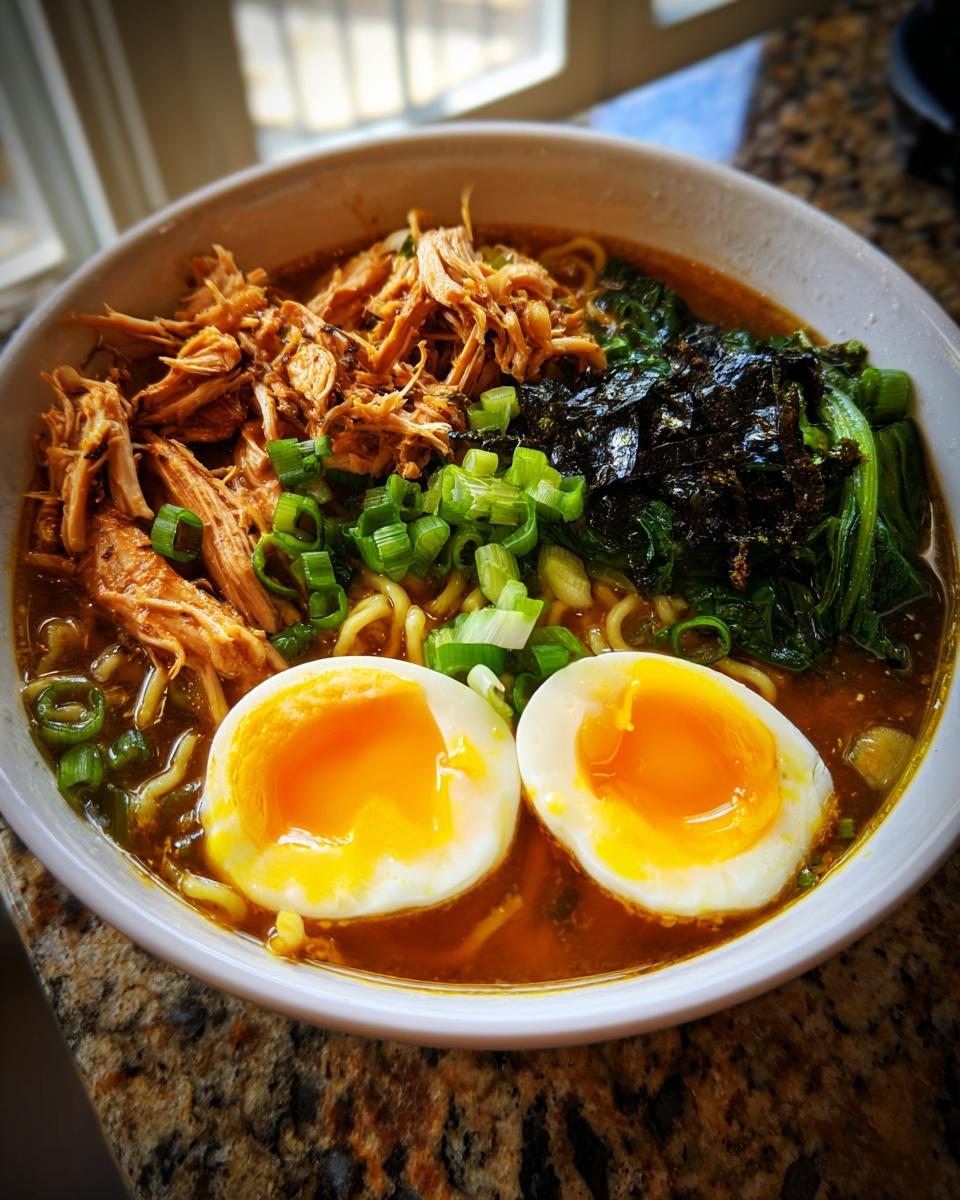
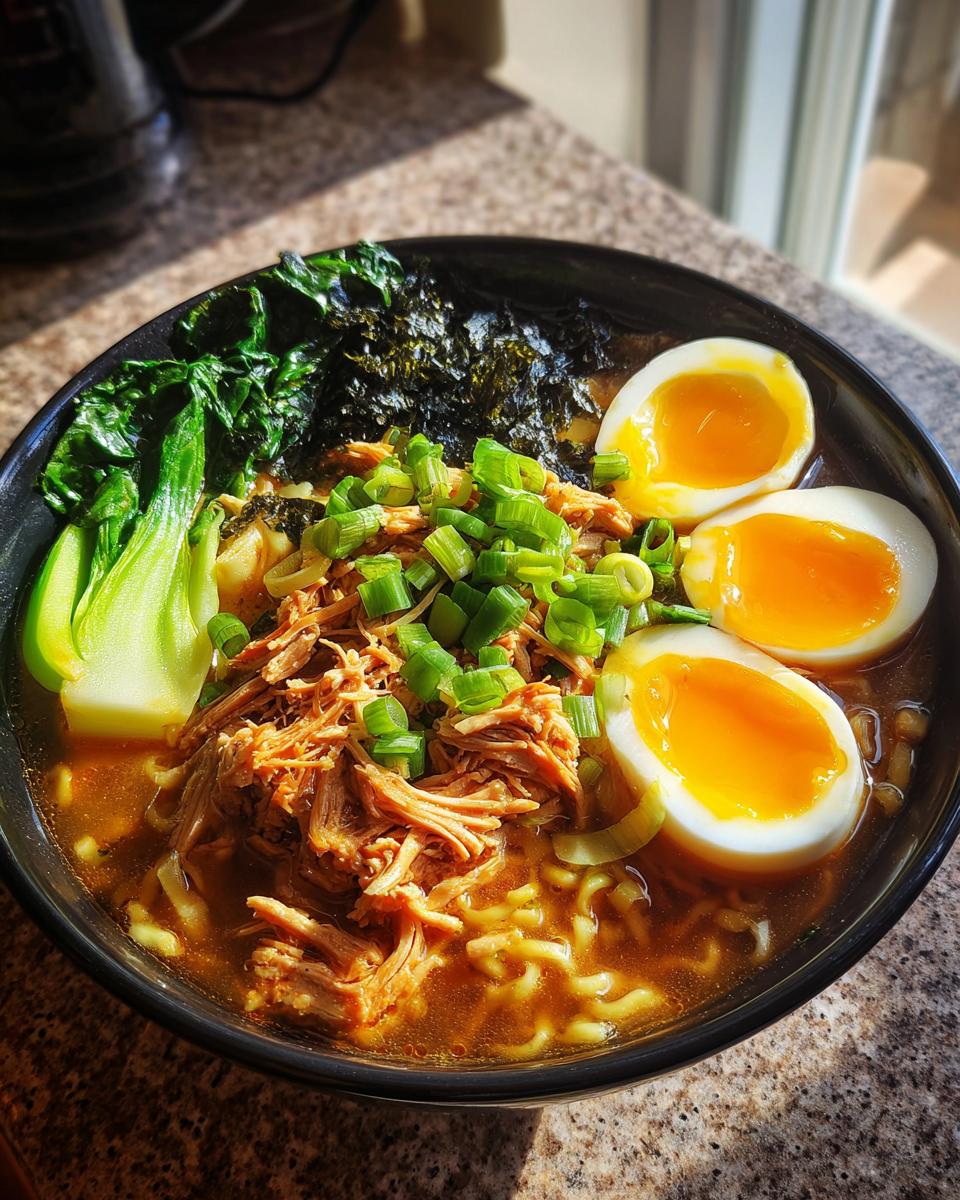
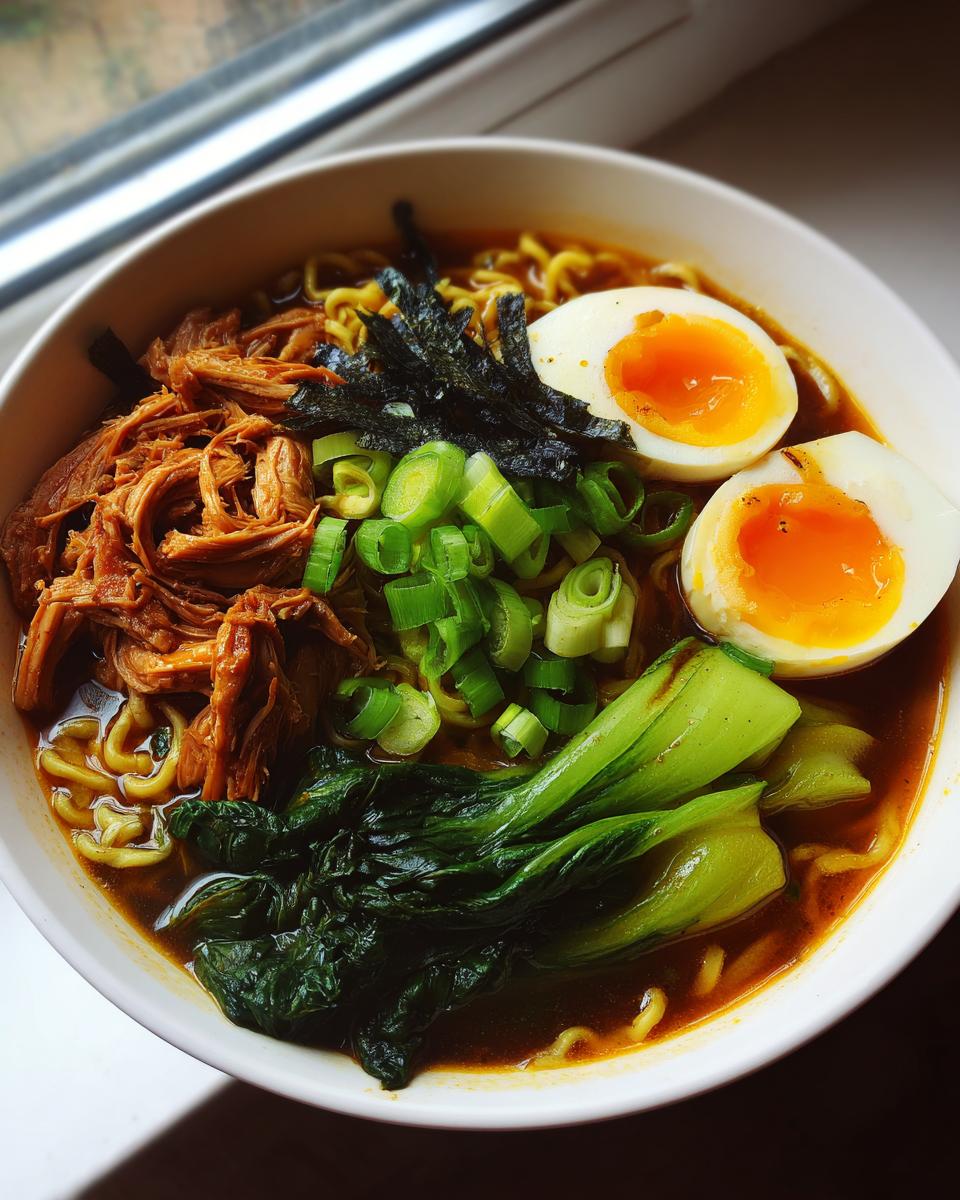
Time to build those bowls! Start by dividing the drained ramen noodles evenly into your four serving dishes. Next, ladle that piping hot, flavorful broth right over the noodles. Now, arrange your toppings beautifully. Place a helping of the shredded chicken in there, nestle half of that gorgeous soft-boiled egg on top, generously sprinkle with those sliced green onions, and finish with a crisp sheet of nori if you’re using it. Dig in immediately while it’s steaming hot!
Tips for Success When Making Nourishing Homemade Chicken Ramen
Even though this is a straightforward recipe, those little details are what separate a good bowl of soup from an absolutely stellar bowl of nourishing homemade chicken ramen. I’ve made plenty of mistakes learning this, so let me save you some time!
Here are a few insider tricks that I swear by every single time I make this:
- The Noodle Separation Rule: This is huge. Never, ever cook your ramen noodles directly in the broth unless you plan on eating the whole batch immediately. Those noodles release starch, making your beautiful, clear broth cloudy and gummy. Always cook them separately and drain them well before they hit the bowl. If you’ve ever wondered how restaurants keep their broth perfect, that’s the secret!
- Broth Adjustment is Key: The recipe calls for 2 tablespoons of soy sauce, but honestly, the saltiness of chicken broth varies wildly. After you pull the chicken out and before you add the bok choy, taste that broth. Does it pop? If it tastes a little flat, add soy sauce a teaspoon at a time until it sings. It’s easier to add saltiness than take it away!
- Egg Timing Tolerance: If you are worried about 6 or 7 minutes for the eggs, start with 6 minutes. You can always drop them back into the simmering water for 30 seconds if they feel too runny, but if you overcook them past 7 minutes, you lose that glorious jammy yolk. Patience for one minute can be the difference between ramen perfection and standard hard-boiled.
If you want to dive deeper into general broth secrets—because making liquids taste amazing is half the battle in cooking—you should definitely read my thoughts on things I wish I knew before cooking steak; the temperature control and resting principles apply perfectly to simmering broth, too!
Customizing Your Nourishing Homemade Chicken Ramen: Variations
This recipe for nourishing homemade chicken ramen is a fantastic launching pad, truly! Yes, it’s perfectly balanced as written, but I love encouraging everyone to make it their own. Think of the broth as a blank canvas for your spice cabinet!
Since the recipe notes mention swapping chicken for tofu, let’s start there. If you are going meatless, I highly recommend pressing firm or extra-firm tofu really well—maybe even frying it slightly before adding it in place of the chicken. This keeps it from getting waterlogged in that beautiful broth.
If you’re strictly a meat-eater like me, but just want to switch things up, try reserving a little bit of your shredded chicken and tossing it lightly in something spicy before putting it in the bowl. It’s like getting two different flavor profiles in one soup!
Leveling Up Your Toppings Game
Honestly, the toppings are where you can go crazy. The standard green onion and nori are great, but if you have them hanging around, throw them in! I love adding kernels of sweet corn right at the end; the sweetness pairs surprisingly well with the salty soy sauce.
Also, mushrooms! Sliced shiitake or enoki mushrooms are amazing. You can toss them in the broth right alongside the bok choy for those last two minutes—they only need a quick wilt to soften up perfectly. Don’t forget the chili oil, though. Just a tiny swirl adds that warmth and depth that makes Asian soups addictive.
If you enjoy that spicy kick in your chicken dishes, you absolutely have to try my spicy honey ginger chicken bowls recipe sometime. You can take that spicy glaze mixture and drizzle a bit over your shredded chicken before adding it to the ramen—wow! It’s next-level delicious.
Serving Suggestions for Your Nourishing Homemade Chicken Ramen
Because this nourishing homemade chicken ramen is such a complete meal—it’s got the broth, the carbs from the noodles, and the protein—you really don’t need much on the side. In fact, serving anything too heavy next to it would feel overwhelming, right? The goal here is to complement those salty, umami flavors without stealing the show.
When I serve this for dinner, I usually aim for something cool, crunchy, or maybe a little bright to cut through the richness of the broth. It cleanses the palate between big spoonfuls of soup!
Light, Cool Sides That Pair Perfectly
You want contrast, my friend! A little crunch against that silky broth is perfect. My absolute favorite thing to have alongside ramen is something light and vinegary. A simple side of steamed edamame tossed with a pinch of sea salt is quick and hits the right notes.
If you’re feeling adventurous and want a cold vegetable side, you can’t go wrong with a super simple cucumber salad. Keep the dressing light—rice vinegar, a whisper of sesame oil, maybe a tiny bit of sugar. It’s refreshing and makes the whole meal feel even cleaner and healthier!
If you like dips, you know I love my yogurt dips! I have a great cucumber dill yogurt dip recipe that, while clearly not Asian-inspired, offers such a cool, calm flavor profile that it works surprisingly well as a palate cleanser between spicy or salty bites of ramen broth.
Appetizers That Don’t Weigh You Down
If everyone is starving and needs a little starter before the ramen is ready, keep it snacky. Think small bites!
- Quick Pickled Veggies: Thin slices of carrot or daikon radish pickled quickly in white vinegar and sugar. They add texture and tanginess!
- Miso Soup Starter: If you have a little bit of extra miso paste, whisking up a tiny, light bowl of pure miso soup as an appetizer warms everyone up without spoiling their appetite for the bigger ramen bowl that follows.
Remember, the broth is the star here, so keep the supporting acts light and vibrant!
Storage and Reheating Instructions for Leftover Nourishing Homemade Chicken Ramen
Oh, the eternal question: what do you do when you inevitably have glorious leftovers from your nourishing homemade chicken ramen? If you toss everything—noodles, broth, and all—into one container, I’m going to have to come over and gently lecture you! The secret to perfect leftovers is keeping the components separate, especially those noodles.
Noodles soak up liquid like crazy, and if you store them in the broth overnight, they turn into a sad, gelatinous clump by morning. Don’t let that happen to your hard work!
Separating Components for Optimal Storage
When you know you’re having leftovers, portion everything out wisely before you even sit down to eat the first bowl. You need three distinct storage containers:
- The Broth: This is your golden ticket—it will last the longest. Ladle the broth (including any veggies you want to save, like the bok choy) into an airtight container. It’s great in the fridge for up to four days.
- The Chicken: Keep the shredded chicken separate. It stays much juicier this way. If you made extra soft-boiled eggs, keep those peeled and whole in a container with a tiny splash of water to keep them from drying out, but eat those within two days for the best yolk texture.
- The Noodles: Cook your noodles slightly *al dente* if you plan on storing them, but honestly, I just cook only what I know I’ll eat right away. For the leftovers, it’s much better to keep the ramen noodles dry and uncooked, or if you did store them in a small amount of liquid, use them the very next day.
Reheating Your Ramen for a Second Perfect Meal
Reheating is simple if you kept things separate! First, pour your broth into a small saucepan and bring it back up to a gentle simmer over medium heat. You don’t want a boil, just hot enough to steam everything.
Next, you have two options for the noodles. If you have uncooked noodles, cook a small, single portion according to the package directions, drain well, and place them in your bowl. If you have leftover cooked noodles, just dunk them into the simmering broth for about 60 seconds to hydrate and heat them through—don’t let them swim too long!
Once the noodles are ready in the bowl, ladle the hot, fragrant broth over them. Top immediately with your reheated chicken, pop on a fresh, half-cut egg (if you made new ones), and sprinkle with freshly sliced green onions. It tastes almost as good as the first time—maybe even better because you know exactly how good it is!
Frequently Asked Questions About Nourishing Homemade Chicken Ramen
When folks try to make this nourishing homemade chicken ramen for the first time, they usually have a couple of questions about swaps or spice levels. It’s totally normal! As long as you respect the broth-making process, you can tweak the rest to fit exactly what you have in the pantry. Here are some of the things I hear most often in my kitchen emails.
What if I don’t have mirin? Can I substitute it?
Oh, the mirin question! Mirin is that slightly sweet Japanese rice wine that gives the broth just a tiny bit of depth and polish—it’s fantastic, but I know it’s not always in everyone’s cupboard. If you absolutely cannot find it, don’t sweat it! You can substitute it with dry sherry, or honestly, just use a teensy splash of dry white wine mixed with about half a teaspoon of sugar. It mimics the sweetness without being overwhelming. Just use less of the substitute than the recipe calls for in mirin, and taste as you go.
Can I use dried ginger instead of fresh ginger?
I’m going to be upfront here: for this specific ramen broth, fresh ginger is what I insist on. Dried or powdered ginger is incredibly potent and very different in flavor from freshly grated ginger root. It will taste earthy rather than bright and citrusy, which is what we need to lift the whole soup! If you are in a pure bind, you could use about 1/4 teaspoon of ground ginger for the amount of liquid, but please try to grab fresh—it makes such a difference in a simple broth like this. If you need a reference for making things from scratch, I talk about making things like heavy cream at home, but for ginger, fresh is best!
How do I make this chicken ramen spicier?
That’s the easiest fix, and I love that you’re thinking spicy! You have a few options, depending on what kind of heat you like. For heat that builds slowly in the broth itself, stir in a teaspoon of sriracha or a dab of chili garlic sauce right when you add your soy sauce in Step 1. For more of a finishing kick, drizzle chili oil directly onto the top of your finished bowl of chicken ramen right before serving. That usually gives you a beautiful red swirl and the perfect amount of burn!
Can I make the broth ahead of time?
Yes, you absolutely can! The broth is actually *better* when made a day ahead because the flavors have time to really marry and deepen. Make the broth and shred the chicken, but keep them separate. Store cooked noodles and softened bok choy separately as well. When you are ready to eat, reheat the broth mixture gently, cook your noodles fresh (or reheat them quickly in water), and assemble. This makes assembling your weeknight meal lightning fast!
Estimated Nutritional Snapshot for Nourishing Homemade Chicken Ramen
Now, while I’m a cook, not a certified nutritionist, I always share this breakdown because I know so many of you are looking for genuinely filling weeknight meals that don’t derail your goals. This nourishing homemade chicken ramen really shines because it’s packed with lean protein—almost 40 grams!—while keeping the fat content reasonable.
This information is based on the standard ingredient amounts I listed out earlier, using chicken breasts instead of thighs, and assuming you’re serving one of the four equal portions. Like any homemade dish, the numbers can shift depending on the brand of broth you use or how much soy sauce you decide to drizzle on top at the end.
But for a hearty, satisfying bowl, here’s what we are looking at:
- Serving Size: 1 bowl
- Calories: 450
- Protein: 38g (That’s why it’s so filling!)
- Fat: 15g (Mostly healthy fats from the egg yolk and chicken)
- Carbohydrates: 45g (Mostly from the noodles)
- Sugar: 5g
- Sodium: 950mg (This varies the most based on your broth and soy sauce!)
Just remember, this is just an estimate, not a medical guarantee! If you’re strictly watching sodium for health reasons, use low-sodium broth and go easy on that added soy sauce. The beauty of making your own chicken ramen is putting *you* in control of every single ingredient!
Share Your Experience Making This Chicken Ramen
That’s it! You made it through crafting a truly incredible bowl of nourishing homemade chicken ramen. I really, really hope you take a moment to stop, inhale that amazing aroma, and just savor every single slurp. It’s such a comforting meal, and it feels so rewarding when you know you made that broth from scratch!
Now, I need your help! This recipe is a family favorite here, but I absolutely love hearing what you do in your kitchens. Once you’ve tucked into your first bowl, swing back here and give the recipe a star rating. Were the eggs perfect? Did you adjust the ginger?
Don’t be shy! Leave a comment below telling me about your experience. Did you try adding the corn, or maybe substitute the chicken for tofu like we talked about? Success stories and even little oopsies help everyone else who tries this recipe!
If you loved this recipe and want more quick, hearty meal ideas that don’t sacrifice flavor, make sure you check in often. And if you snapped a picture of your beautiful finished bowls on Instagram or Pinterest, please tag me! It genuinely makes my day to see my recipes showing up on your dinner table. For another fun, easy noodle night, you might want to try my guide on easy chicken ramen bowls next week!
Happy slurping, everyone!
Print
Nourishing Homemade Chicken Ramen
- Total Time: 45 min
- Yield: 4 servings 1x
- Diet: Low Fat
Description
A recipe for making flavorful homemade chicken ramen soup.
Ingredients
- 6 cups chicken broth
- 1 pound boneless, skinless chicken thighs or breasts
- 2 tablespoons soy sauce
- 1 tablespoon mirin
- 1 teaspoon grated fresh ginger
- 2 cloves garlic, minced
- 8 ounces ramen noodles
- 2 large eggs
- 2 cups chopped bok choy
- 4 green onions, sliced
- Nori sheets, for garnish (optional)
Instructions
- Combine chicken broth, chicken, soy sauce, mirin, ginger, and garlic in a large pot.
- Bring the mixture to a boil, then reduce heat and simmer until the chicken is cooked through, about 15 to 20 minutes.
- Remove the chicken, shred it using two forks, and set aside. Keep the broth simmering.
- Cook the ramen noodles according to package directions. Drain well.
- While the noodles cook, prepare the eggs: bring a small pot of water to a boil, gently lower the eggs in, and cook for 6 to 7 minutes for soft-boiled. Immediately transfer to an ice bath, peel, and slice in half.
- Add the bok choy to the simmering broth during the last 2 minutes of cooking to wilt it slightly.
- Divide the cooked noodles among four serving bowls.
- Ladle the hot broth over the noodles.
- Top each bowl with shredded chicken, half a soft-boiled egg, sliced green onions, and nori if using.
Notes
- For richer flavor, roast the chicken briefly before simmering it in the broth.
- Adjust soy sauce amount based on your preference for saltiness.
- You can substitute chicken with firm tofu for a vegetarian option.
- Prep Time: 15 min
- Cook Time: 30 min
- Category: Dinner
- Method: Stovetop
- Cuisine: Japanese
Nutrition
- Serving Size: 1 bowl
- Calories: 450
- Sugar: 5
- Sodium: 950
- Fat: 15
- Saturated Fat: 4
- Unsaturated Fat: 11
- Trans Fat: 0
- Carbohydrates: 45
- Fiber: 3
- Protein: 38
- Cholesterol: 250
Keywords: chicken ramen, homemade ramen, Asian soup, noodle soup, chicken broth recipe